
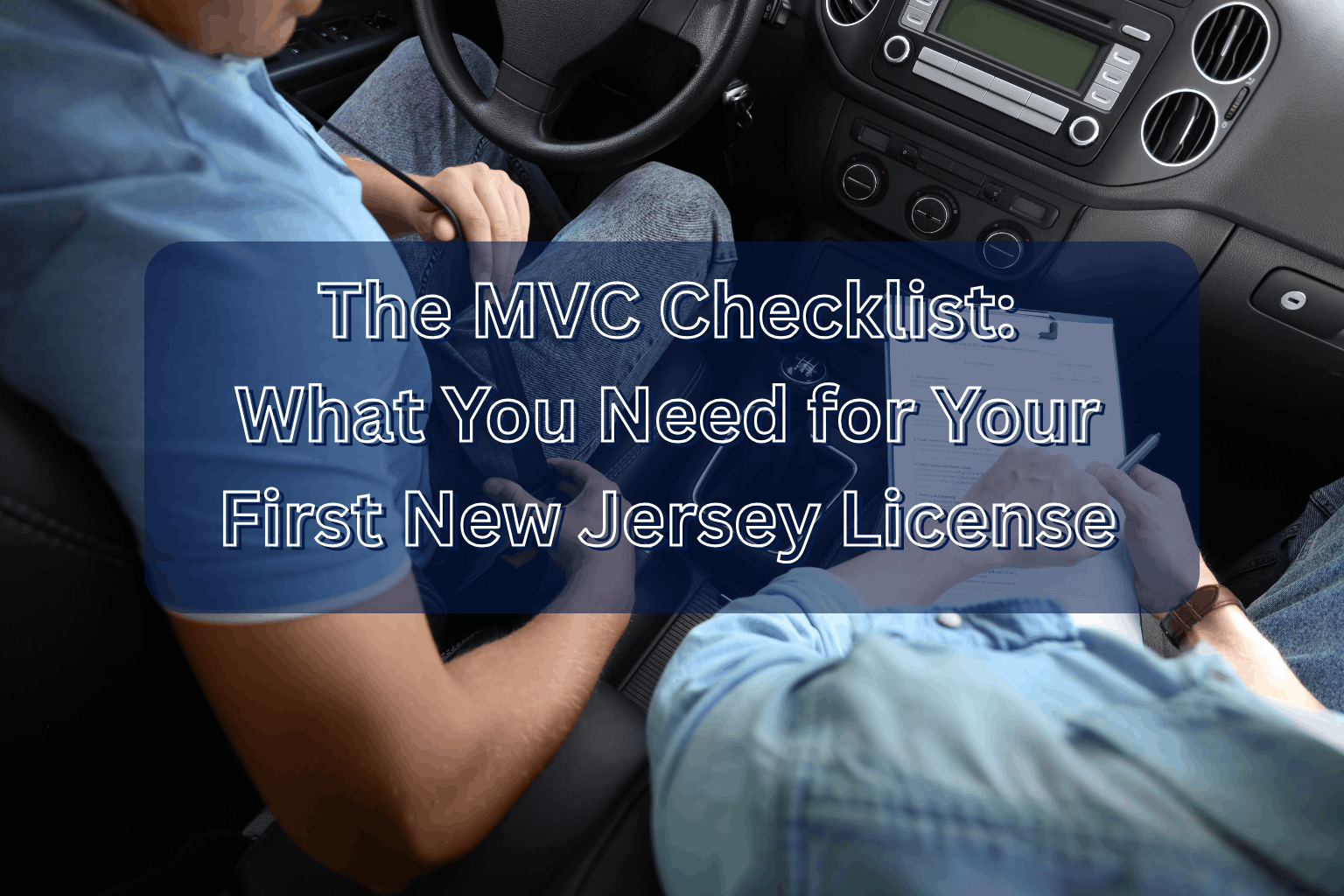
Starting your journey as a driver in the Garden State is an exciting milestone, but walking into a New Jersey Motor Vehicle Commission (MVC) agency without the right paperwork can quickly turn that excitement into frustration. New Jersey is famous for its strict 6 Point ID Verification system, and “being prepared” is the golden rule for any first-time applicant.
Whether you are a teenager starting the Graduated Driver License (GDL) program or an adult applying for an initial permit, this checklist will ensure you get it right the first time.
1. Master the 6 Point ID Verification System
The most important thing to bring to the DMV is a combination of documents that prove your identity. Every document must be an original or a certified copy with a state or municipal seal. Photocopies are not accepted. You must select documents that total at least 6 points:
- Primary Document (4 Points): Most applicants use a Civil Birth Certificate, a valid U.S. Passport, or a Permanent Resident Card.
- Secondary Documents (1–3 Points): Common choices include a US school photo ID with transcripts (2 points), a Social Security card (1 point), or a bank statement/record (1 point).
- Social Security Number: You must provide your Social Security number for electronic verification. If you are ineligible for an SSN, you may provide an affidavit to meet this requirement.
2. Prove Your New Jersey Residency
Beyond the 6 points of ID, you must provide one document that proves you physically live in New Jersey. To be valid, the document must show your name and current address. Popular options include:
- A utility or credit card bill issued within the past 90 days.
- A checking or savings account statement issued within the past 60 days.
- A high school or college report card or transcript issued within the past two years.
- An original, unexpired lease or rental agreement.
3. The Path for First-Time Drivers (GDL)
If this is your first license and you are under 21, you must follow the Graduated Driver License steps. This starts with an Examination Permit (for those 17+) or a Special Learner’s Permit (for those 16).
When you head to the Licensing Center for your permit, be ready for:
- The Vision Test: You must have at least 20/50 visual acuity.
- The Knowledge Test: A 50-question exam on New Jersey traffic laws. You must score at least 80% to pass.
- The Fees: Be prepared to pay the $10 permit fee and the $4 reflective decal fee (required for GDL drivers under 21).
4. Scheduling Your Appointment
New Jersey MVC agencies operate primarily by appointment. You should visit the official MVC appointment portal to schedule your “Initial Permit” or “Knowledge Test” slot. Arriving at the correct Licensing Center (not a Vehicle Center) is essential, as only Licensing Centers handle driver testing.
Staying Safe and Protecting Your New Jersey Driving Record
Once you have your permit and begin practicing on New Jersey’s busy highways, you will quickly realize that the Garden State has some of the highest traffic density in the country. Navigating “jughandles,” complex circles, and heavy commuter traffic requires a high level of defensive driving skill.
To help you become a safer driver and manage the costs of being a new motorist, American Safety Institute offers the 6-Hour New Jersey Defensive Driving Course. This state-approved course is an invaluable resource for first-time drivers and new residents alike. By completing this online program, you gain a deeper understanding of New Jersey’s specific traffic laws and accident prevention techniques.
The benefits of taking the ASI New Jersey Defensive Driving Course are significant:
- Insurance Discounts: Most New Jersey insurance companies offer a mandatory 10% discount on your premiums for three years upon completion.
- Point Reduction: The course allows you to remove up to 2 points from your driving record, providing a “safety net” for your new license.
- Flexibility: The 6-hour course is 100% online and self-paced, meaning you can learn on your schedule from any device.
By using the MVC Checklist to secure your license and following up with a defensive driving education, you aren’t just getting a piece of plastic, you are ensuring you are a safe, informed, and cost-effective driver for years to come on the New Jersey roads.